
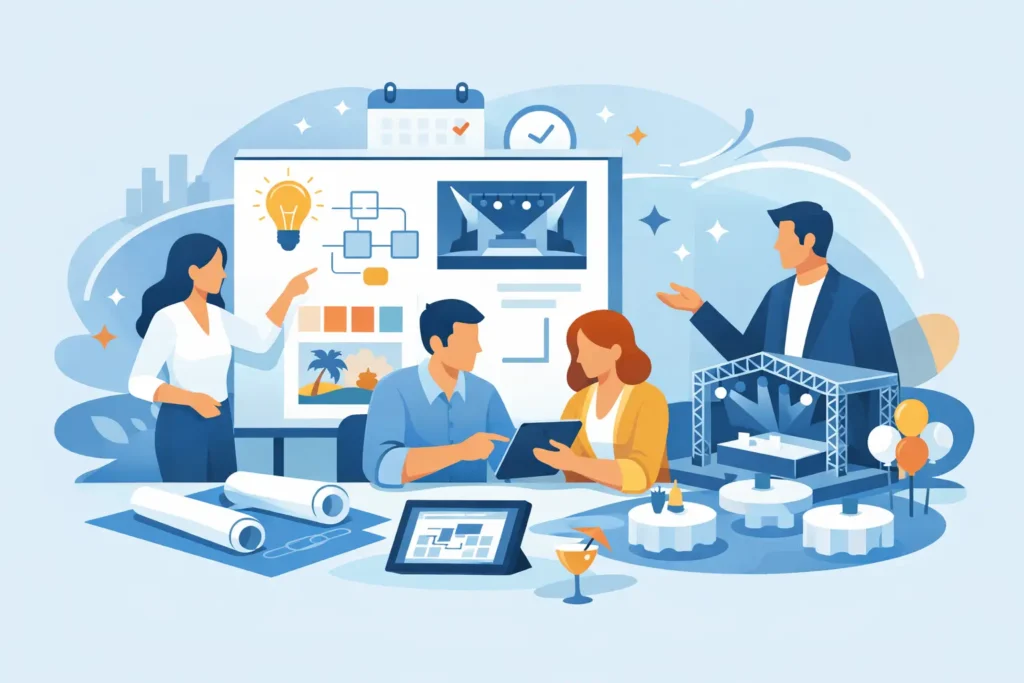
A well-run event can still miss the mark if the concept is weak. You can have the venue, the schedule, the staffing, and the vendors lined up, yet still end up with an experience that feels generic, confusing, or forgettable. That is where event concept development services matter. They help organizations define what the event is really supposed to do, how it should feel, and why people should care enough to show up and stay engaged.
For organizations planning public events, races, nonprofit activations, municipal programs, and branded experiences, concept work is not a cosmetic step. It is the foundation that guides every decision that follows. When the concept is clear, planning gets easier, stakeholder alignment improves, and the final event has a much better chance of delivering real value.
What event concept development services actually include
Event concept development services are often misunderstood as brainstorming alone. In practice, they are much more disciplined than that. The work usually begins by identifying the event’s purpose, audience, constraints, and desired outcomes. From there, the concept is shaped into something actionable, not just creative.
That can include defining the event theme, participant journey, format, programming approach, visual direction, site flow, brand integration, and engagement strategy. It may also include decisions about whether an existing event should be refreshed, expanded, repositioned, or rebuilt from the ground up.
Good concept development connects strategy to execution. It asks practical questions early. Who is this event for? What should attendees remember? What should sponsors, partners, or community stakeholders gain from participating? What operational realities will shape the experience? If those answers are not resolved at the start, they tend to create friction later in budgeting, marketing, logistics, and on-site operations.
Why concept work matters before planning starts
Many organizations start with logistics because logistics feel urgent. Dates need to be secured. Vendors need to be contacted. Permits may be required. Those steps are real, but moving too quickly into execution without concept clarity can create expensive rework.
A concept gives the event a center of gravity. It helps teams decide what belongs and what does not. That matters when stakeholders have competing opinions, when budgets are limited, or when an event has multiple goals that are not naturally aligned.
A fundraising event, for example, may need to inspire donors, recognize sponsors, satisfy a board, and create a smooth guest experience. A road race may need to balance participant energy, public safety, municipal coordination, volunteer capacity, and sponsor visibility. In both cases, concept development helps establish priorities before the planning calendar fills up with tactical decisions.
Without that early strategic work, teams often compensate by adding more elements. More signage, more programming, more entertainment, more messaging. More does not automatically create a better event. Often it creates noise. A strong concept makes the event feel intentional.
The difference between an idea and a developed event concept
Most organizations already have ideas. They may know they want a more modern event, a stronger community turnout, a better sponsor experience, or a refreshed identity for an annual program. Those are valid starting points, but they are not yet a concept.
A developed event concept turns broad ambition into a clear experience framework. It defines what success looks like, who the event is built for, and how every major component supports the intended outcome. It also tests whether the idea can work operationally.
That last point matters. Some concepts sound great in a planning meeting and fall apart when you account for staffing, site conditions, timeline pressure, permitting, or attendee behavior. Experienced event professionals know how to shape ideas that are both engaging and executable.
This is one of the biggest benefits of working with a team that understands production as well as design. Creativity without operational discipline can produce fragile events. Operational discipline without a compelling concept can produce forgettable ones. The strongest events need both.
When organizations should bring in concept development support
Concept development is not only for brand-new events. It is also valuable when an existing event has plateaued, lost clarity, or outgrown the internal team managing it.
Sometimes the signs are obvious. Attendance is flat. Sponsors are harder to retain. The event feels busy but not engaging. Internal teams are spending too much time solving recurring issues without addressing the bigger problem. In other cases, the need is more strategic. A nonprofit may want to reposition a signature event for a different donor audience. A municipality may need to make a public event more participant-friendly while preserving community trust. A race organizer may want to improve the course experience, festival atmosphere, and brand cohesion all at once.
Concept development support is especially useful when there are many stakeholders involved. Different departments, boards, sponsors, committees, or public agencies often bring valid but competing priorities. A structured concept process creates a way to evaluate those priorities against the event’s core purpose.
What strong event concept development services should deliver
The best concept work produces clarity that can be used immediately. It should not leave a client with abstract language and a mood board that no one knows how to apply.
A strong deliverable often includes a defined event vision, target audience understanding, positioning, experience goals, programming direction, site or flow recommendations, and practical guidance for the next phase of planning. It should help leadership make decisions, help marketers tell a sharper story, and help operations teams execute with fewer surprises.
Just as important, the process should identify trade-offs. Not every event can be everything at once. If the budget is constrained, the concept may need to focus on a few high-impact experience moments rather than broad expansion. If the audience is diverse, the concept may need to balance accessibility, excitement, and clarity instead of leaning too far into one dimension. If an annual event has strong traditions, the right move may be a refresh rather than a complete reinvention.
That kind of judgment is where experience shows.
How concept development shapes the attendee experience
Attendees may never hear the phrase event concept development services, but they feel the results. They feel it when arrival is intuitive, when messaging is consistent, when the schedule makes sense, and when the event atmosphere matches what was promised.
They also feel the absence of concept. That shows up in disconnected programming, awkward sponsor placement, unclear wayfinding, slow transitions, or experiences that seem designed around internal preferences instead of participant needs.
Concept development puts the attendee at the center early. It considers not just what the organizer wants to present, but how people will move through the environment, what will hold their attention, where confusion might occur, and what moments are likely to create energy or connection.
For participant-facing events, this is not a small detail. It affects satisfaction, retention, word of mouth, and the credibility of the organization behind the event.
Why local context can matter
In regions like New England, local context often shapes event concepts more than national planning templates account for. Venue types, seasonal timing, municipal requirements, community expectations, and attendee behavior can vary meaningfully across markets.
That does not mean every event needs a heavily localized identity. But it does mean concept development should reflect where and how the event will actually operate. An idea that works in a dense urban footprint may need adjustment for a rural destination event. A community-centered public event may require a different engagement strategy than a sponsor-driven branded activation. The concept should fit the setting, not fight it.
This is one reason experienced agencies such as Calibrate Event Production often add value beyond creative direction alone. They can pressure-test concepts against the realities of delivery, which helps clients avoid attractive plans that become difficult to execute well.
Choosing the right partner for concept development
Not every event partner approaches concept work the same way. Some firms focus primarily on aesthetics. Others are built around logistics and treat concept as secondary. For complex events, organizations usually need a partner that can connect both sides.
Look for a team that asks hard questions early, not just for your preferred theme or color palette. They should want to understand your goals, stakeholders, audience, constraints, and measures of success. They should be able to explain how the concept will influence planning, production, and the attendee experience.
It also helps to work with a partner that is comfortable saying no to ideas that do not support the event. Reassurance is useful, but so is clear guidance. The point of concept development is not to approve every possibility. It is to build an event that works.
If your event feels like it is being planned from a checklist instead of a clear vision, that is usually the signal to step back and define the concept before adding more moving parts. The right strategic work at the front end can save time, reduce friction, and give your event a stronger reason to be remembered.