
A crowded check-in, unclear signage, a program that runs late, and a sponsor area nobody visits – most event problems do not start on event day. They start much earlier, when organizations treat event design services as decor instead of strategy.
That misunderstanding is expensive. Event design services are not just about making a venue look polished. At their best, they shape the full participant experience – how people arrive, move, engage, remember the event, and talk about it after it ends. For brands, nonprofits, municipalities, race organizers, and community-facing organizations, that work matters because the event itself becomes a public expression of your standards.
What event design services actually cover
Strong event design starts with intent. Before anyone chooses layouts, signage, staging, entertainment, or visual elements, there needs to be a clear answer to a more basic question: what should this event achieve, and what should attendees experience while they are there?
That sounds simple, but it usually is not. A fundraising walk has different design priorities than a downtown festival. A corporate community event has different risks and audience expectations than a race weekend. A public-facing event may need to balance brand presence, accessibility, sponsor value, volunteer coordination, and site flow all at once. Good design work holds those priorities together so the event feels coherent rather than stitched together.
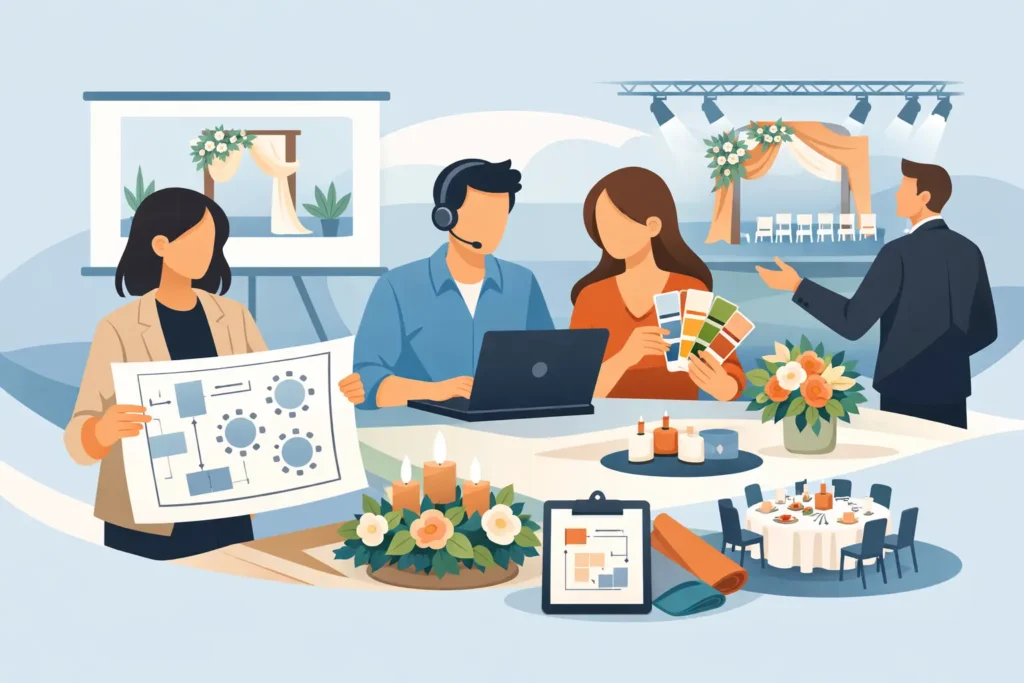
In practice, event design services often include concept development, attendee journey planning, site layout, wayfinding, production planning, vendor coordination, staging decisions, schedule shaping, branded touchpoints, and on-site experience management. The visual layer matters, but it sits on top of operations. If the event looks strong but moves poorly, people still feel the failure.
Why event design services matter beyond aesthetics
A well-designed event reduces friction. People know where to go. The pacing feels deliberate. Key moments land when they should. Sponsors feel visible without overwhelming the audience. Staff and volunteers are set up to help rather than scramble. None of that happens by accident.
This is where many internal teams get stretched. An organization may have smart people handling marketing, communications, fundraising, or community outreach, but live event design asks for a different kind of thinking. It requires someone to connect the creative vision with practical delivery, and to make decisions that hold up under real-world pressure.
There is also a business case for doing this well. Better event design can improve attendee satisfaction, sponsor retention, participant dwell time, donor experience, and brand perception. It can also reduce waste – less duplicated effort, fewer last-minute fixes, and fewer costly decisions made without a full picture of the site or schedule.
The difference between planning and design
Planning and design are closely connected, but they are not the same. Planning focuses on timelines, budgets, staffing, permits, communications, and logistics. Design focuses on the attendee experience and the structure that supports it.
The strongest events need both. If planning happens without design, the event may be technically sound but forgettable. If design happens without planning, the event may look ambitious on paper but fail under live conditions.
That is why organizations often benefit from a partner that can manage both sides. When the same team is thinking about concept, flow, production, vendors, volunteer roles, and site operations, there is less disconnect between the vision and the execution. Calibrate Event Production works in that space, helping clients move from broad goals to events that are organized, participant-centered, and ready for the realities of live delivery.
Event design services for different types of organizations
Not every client needs the same level of support, and that is where nuance matters. Some organizations are building an event from scratch and need foundational strategy. Others already have an annual event but know it has plateaued. The problems are familiar: the layout no longer works, attendance has changed, sponsor expectations have grown, or the event simply feels dated.
For a nonprofit, event design may need to reinforce mission while improving donor experience and volunteer flow. For a municipality, the priority may be public safety, community access, and better use of public space. For a race organizer, the participant experience depends on registration flow, start and finish line energy, course support, signage, and site coordination. For a brand, the event needs to feel intentional, on-message, and worth attending without becoming overly scripted.
This is why a one-size-fits-all package rarely works. Good event design services respond to the event’s purpose, audience, scale, and operational demands.
What a strong event design process looks like
The process usually begins with discovery. That means understanding the audience, the goals, the site conditions, the schedule, the partners involved, and the pressure points from past events. Sometimes the biggest opportunity is creative. Other times it is operational. Often it is both.
From there, the design process turns strategy into structure. The event needs a shape. Where do people enter? What do they see first? Where do they gather? What moments deserve emphasis? How do vendors, volunteers, sponsors, speakers, or performers fit without competing for space and attention? These decisions influence the full rhythm of the day.
Then comes refinement. A solid concept has to survive real conditions like weather plans, staffing limits, setup windows, vehicle access, utility needs, crowd patterns, and budget realities. This is where experienced event teams add value. They know how to protect the experience while adjusting the plan so it can actually be executed.
Finally, design carries through to show flow and on-site management. The best ideas still need timing, cueing, communication, and supervision. A well-designed event should feel easy to attendees. Behind the scenes, it is anything but casual.
When to bring in event design services
Earlier is usually better. If event design begins after the venue is locked, the site map is final, and vendors are already booked, options narrow quickly. That does not mean late-stage support has no value. A strong event partner can still improve flow, simplify operations, or refresh the attendee experience. But the earlier design is part of the conversation, the more impact it tends to have.
That is especially true for first-year events, major event expansions, public events with multiple stakeholders, and events recovering from inconsistent execution. In those cases, design work is not a finishing touch. It is part of risk management.
There are also moments when experienced organizers should pause and reassess. If your team is relying on institutional memory instead of documentation, if attendees often seem confused, if vendors are filling operational gaps, or if your event feels harder to produce each year, those are signs the design and production model needs attention.
How to evaluate event design services
It helps to ask better questions. Not just whether a team can make an event look good, but whether they can improve movement, clarify priorities, manage vendors, support staff and volunteers, and make the event easier to run. Design without operational discipline creates stress. Operations without design often produce a flat experience.
Look for a partner that can explain trade-offs clearly. For example, a larger footprint may create more energy, or it may dilute traffic. A packed schedule may seem attractive, or it may reduce dwell time and create turnover issues. More activations can increase engagement, or they can add staffing pressure and site confusion. The right answer depends on your audience and goals.
You also want a team that understands live events as lived experiences, not just deliverables. Attendees do not separate branding from logistics. They experience the event as one thing. If parking is confusing, if announcements are unclear, or if the registration process is frustrating, the overall impression suffers even if the decor is strong.
The real value of event design services
The best events feel intentional. People notice that the experience makes sense, even if they cannot name why. They move through it easily. They find the moments they came for. They stay engaged longer. Sponsors and stakeholders see their role reflected properly. Your team spends less time reacting and more time leading.
That is the real value of event design services. They bring structure to complexity and purpose to every decision that shapes the attendee experience. For organizations producing public, branded, or mission-driven events, that is not an extra layer. It is often the difference between an event that simply happens and one that delivers real impact.
If your next event carries reputational weight, stakeholder expectations, or operational complexity, it is worth asking a more strategic question at the start: not just what do we need to put on, but what do we want people to experience when they get there?